ServicesGutters
Gutters in Warren Park
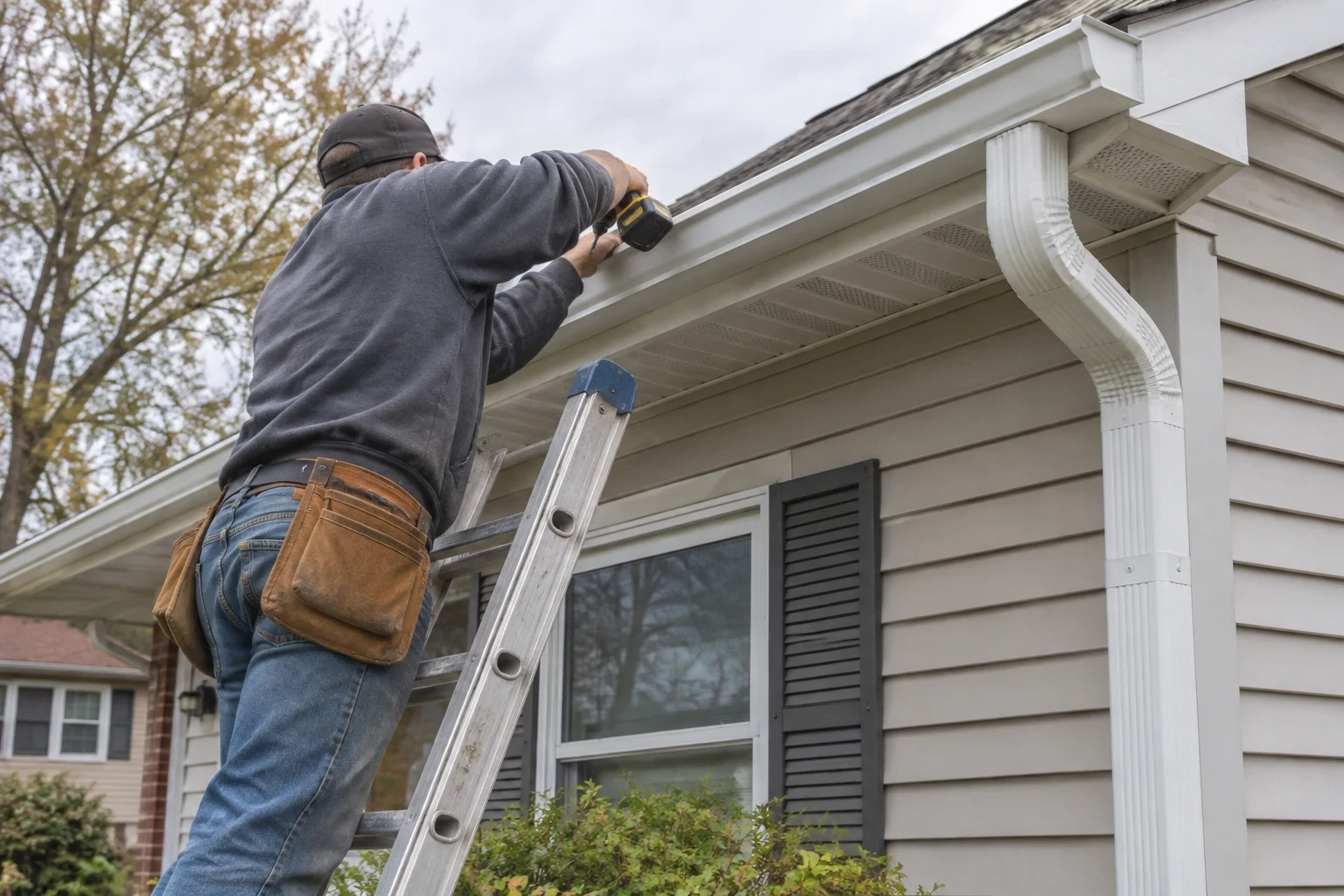
We hang continuous aluminum gutters and downspouts matched to the volume of rain each roof plane sends their way. Before any price, we check the roof edge, fascia and drip edge, show you photos, and explain in plain terms what needs work and why.
Gutters Are Part of the Roof System
A gutter's job is to catch water at the eave and move it at least a few feet from your foundation. When it overflows, sags or pulls away, water runs behind it, soaks the fascia board and the roof deck edge, and pools against the basement or crawlspace wall. Many gutter problems start at the roof, which is why we look at both.
We start every gutter job at the roof edge. We check whether a drip edge is present and lapped into the gutter, whether the fascia is solid, and whether the existing slope actually drains. Then you get plain findings: what is working, what is not, and why. Sometimes a re-pitched run and a new downspout solve the problem. Sometimes the fascia behind it is soft and has to be replaced first.
Freeze and thaw cycles through a central Indiana winter work on loose hangers and open seams, so we build systems that hold their shape under ice and wet leaves.
What Our Gutter Work Includes
Continuous aluminum runs
We form gutters on site from coil stock to the exact length of each eave. That leaves joints only at the corners, which is where older sectional gutters usually leak.
Correct sizing
Most homes do well with 5-inch K-style gutters. Long or steep roof planes that dump a lot of water into one run may need 6-inch gutters and larger 3x4 downspouts. We size from the roof area and pitch, not habit.
Hidden hangers and proper slope
We fasten with screw-in hidden hangers spaced roughly every 2 feet into solid fascia or rafter tails. Runs are pitched about a quarter inch per 10 feet toward the outlet, enough to drain without looking crooked from the street.
Downspouts and discharge
Each downspout goes where its water can be carried well clear of the foundation, with an extension or splash block at the bottom. Where an upper roof would empty onto a lower one, we add a diverter so the lower shingles are not flooded.
Fascia and drip edge repair
If the fascia board is rotted, we replace that section before hanging anything on it. Where drip edge is missing, we add it so water clears the board and lands in the gutter.
Gutter guards when they help
Guards make sense under heavy tree cover. If your lot has little overhead canopy, we will tell you they are not worth the cost.
Signs Your Gutters Need Attention
- Water spilling over the front lip
- If a clean gutter still overflows in a hard rain, it is undersized, pitched backward, or served by too few downspouts.
- Sagging or pulled-away sections
- Old spike-and-ferrule fasteners loosen as the wood around them dries and swells. Once a run sags, water sits in the low spot and adds weight.
- Peeling paint or dark streaks on fascia
- Staining behind the gutter tells us water is slipping past the back edge and wicking into the wood. Over a few seasons that rots the fascia and the edge of the roof deck.
- Wet basement walls or eroded beds
- Washed-out mulch, a trench under the eave or damp basement walls usually trace back to a downspout discharging too close to the house.
- Ice buildup along the eaves
- Heavy icicles and ice in the gutter can point to a drainage problem, and sometimes to attic ventilation or insulation issues we can check during the roof inspection.
How a Gutter Job Runs
- 1
Roof edge check
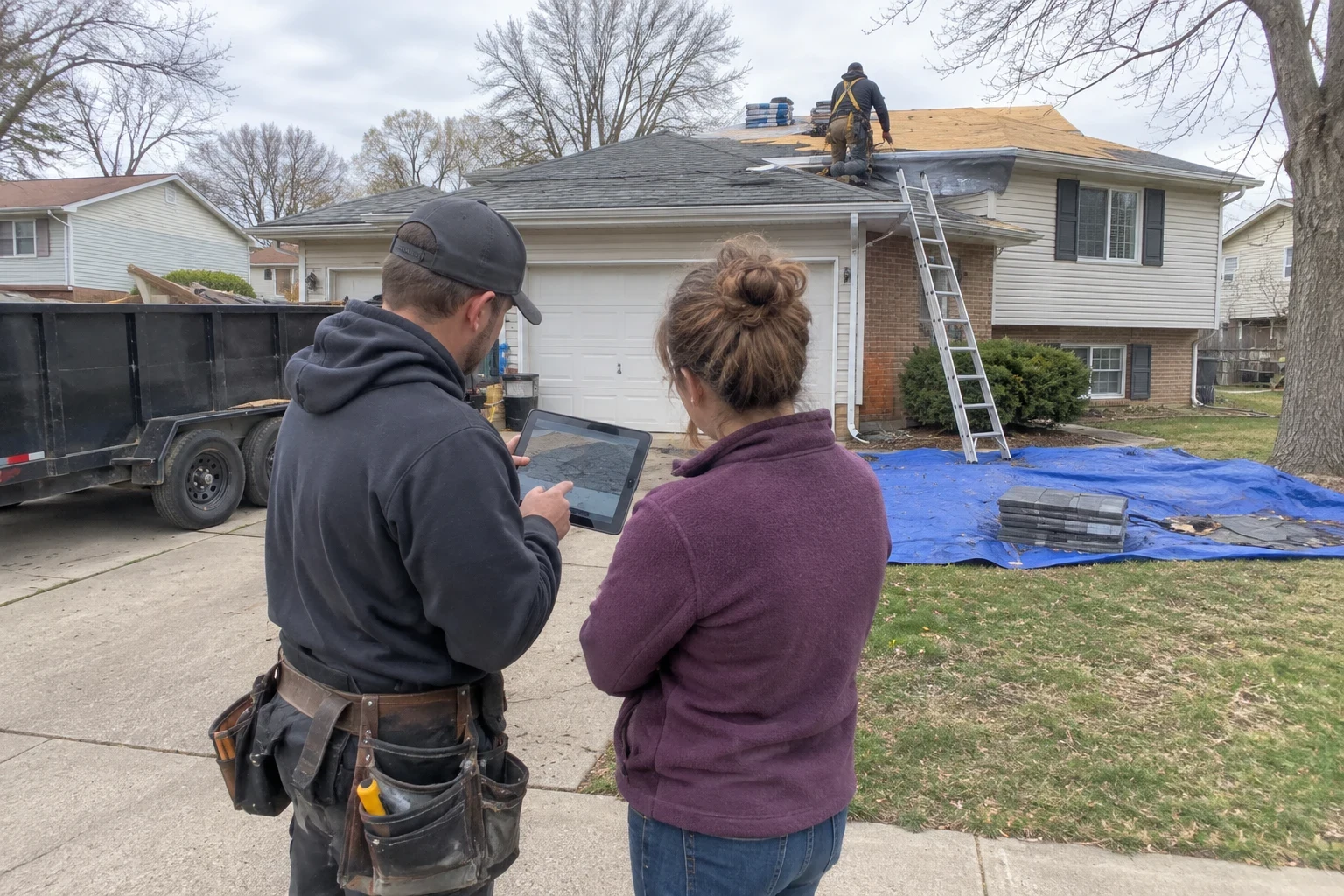
We walk the eaves, probe the fascia for soft spots, check the drip edge and shingle overhang, and measure every run. You see the photos and hear in plain terms what each one shows.
- 2
Line-item estimate
Gutter footage, downspouts, fascia boards and any guards each get their own line. You can see what every fix costs and pick which ones to handle first.
- 3
Tear-off and wood repair
When the crew arrives, the old gutters come down first. Rotted fascia is cut out and replaced, and drip edge goes in wherever it is missing. Ladder feet rest on boards so your lawn and flower beds are not gouged.
- 4
Forming and hanging
We roll one-piece sections on site, set the slope with a string line, seal the corner miters and end caps, and drive each hanger into solid wood.
- 5
Flow test and cleanup
We run a garden hose into the high end of each gutter and watch the water reach the outlet and leave the downspout. Old metal, screws and sealant scraps are gathered up before we go.
What Moves the Price of a Gutter Job
Most of a gutter price comes from how many feet of eave you have and how sound the wood is behind the gutter. We build the number from measurements and probe results taken at your home, not from a flat per-foot rate. Financing is available if you prefer to pay over time.
- Eave length and miters
- Every added foot of eave takes more coil stock. Each inside or outside corner also needs a cut, a fold and a sealed miter, which adds labor.
- Capacity of the system
- A 6-inch gutter with 3x4 downspouts takes heavier coil than a 5-inch gutter with 2x3 outlets. Large or steep roof planes sometimes need that extra capacity, and smaller ones usually do not.
- Rotted fascia
- A hanger screw will not hold in soft wood, so any decayed board is replaced before the new gutter goes up. This is the item a quick quote by phone is most likely to leave out.
- Working height and site access
- Second-story eaves, sloped yards and narrow gaps between houses mean more ladder moves, more setup and sometimes extra equipment.
- Add-ons
- Guards, diverters and downspout extensions each carry their own cost. We include them only when they fix a specific drainage problem we found.
Gutter Questions We Hear Often
- Should I replace my gutters before or after a new roof?
- Usually with or after it. A roof replacement often means new drip edge, and the gutters need to sit correctly under it. If your roof has years left, we can replace the gutters now and set them so they work with a future roof. We will tell you which applies after the inspection.
- Can you repair my gutters instead of replacing them?
- Often, yes. Resealing a leaking miter, re-hanging a sagging run with new hidden hangers or adding a downspout can fix the problem for much less. We recommend full replacement when the metal is bent, the runs are sectional and leaking at many joints, or the sizing is simply wrong.
- Are 6-inch gutters always better?
- No. They carry more water, but on a modest ranch roof a properly pitched 5-inch gutter with enough downspouts drains fine. We size based on roof area and pitch so you are not paying for capacity you do not need.
- Do gutter guards stop all cleaning?
- No guard is maintenance-free. They cut down on leaves and twigs, but fine debris like shingle granules and seed pods still collects and needs an occasional rinse. Under heavy tree cover they are usually worth it.
- Did storm damage my gutters, and will insurance cover it?
- Hail can dent gutters and downspouts, and wind can pull runs off the fascia. We document what we find with photos. We work with homeowners and insurance companies on storm damage claims, so we can explain the process while you deal with your adjuster. See our Storm Damage Repair page for more.
Find Out What Your Gutters and Roof Edge Need
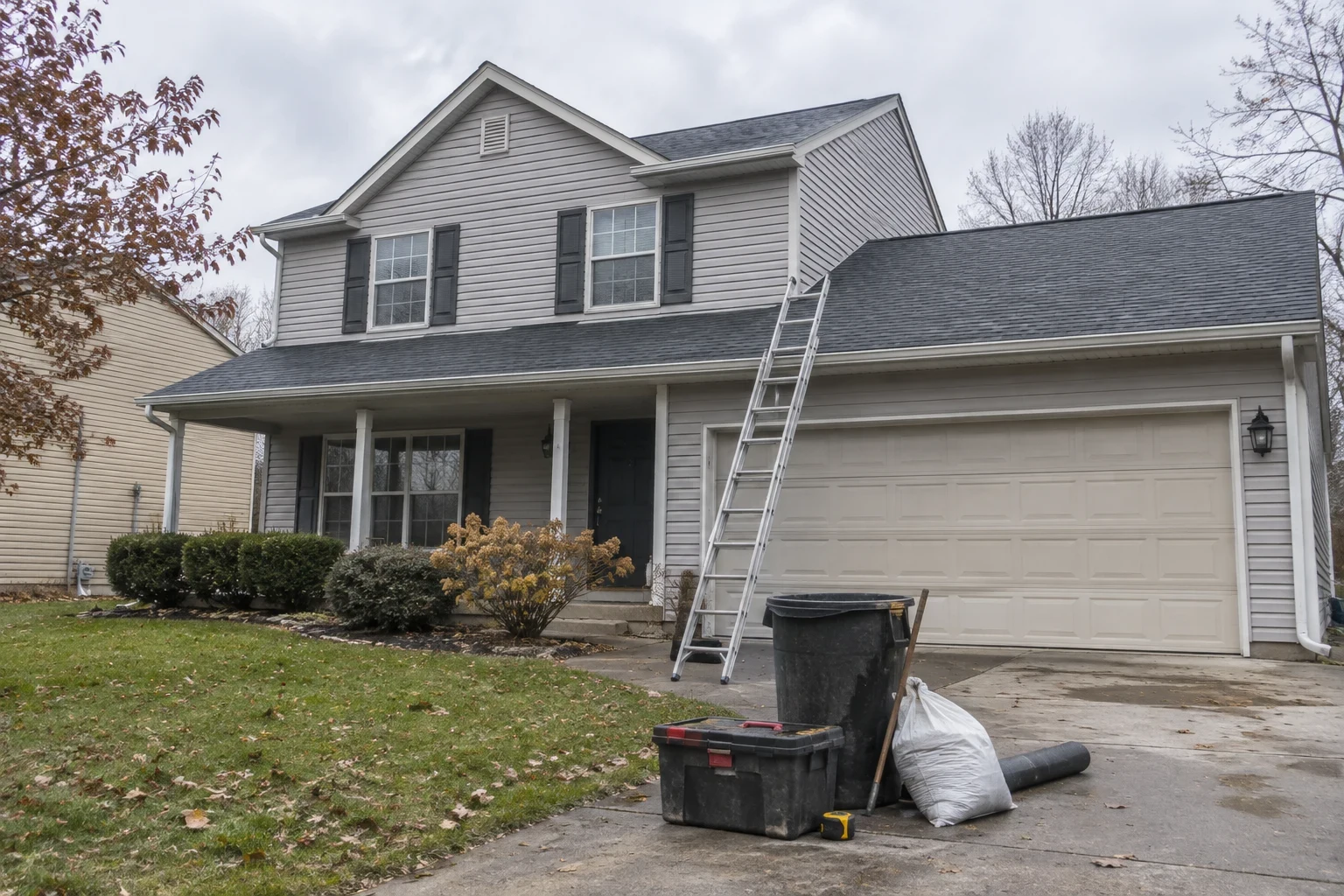
We will look at the gutters, fascia and drip edge together and show you photos of what we find. You decide what to fix from there.