ServicesTPO Roofing
TPO Roofing in Warren Park
Shingles need slope to work. On a porch roof, a rear addition or a garage that sits nearly flat, a single-ply TPO membrane with heat-welded seams keeps water out instead. We start by inspecting the deck and drainage, then tell you plainly what we found.
What TPO Is and Where It Belongs on Your Home
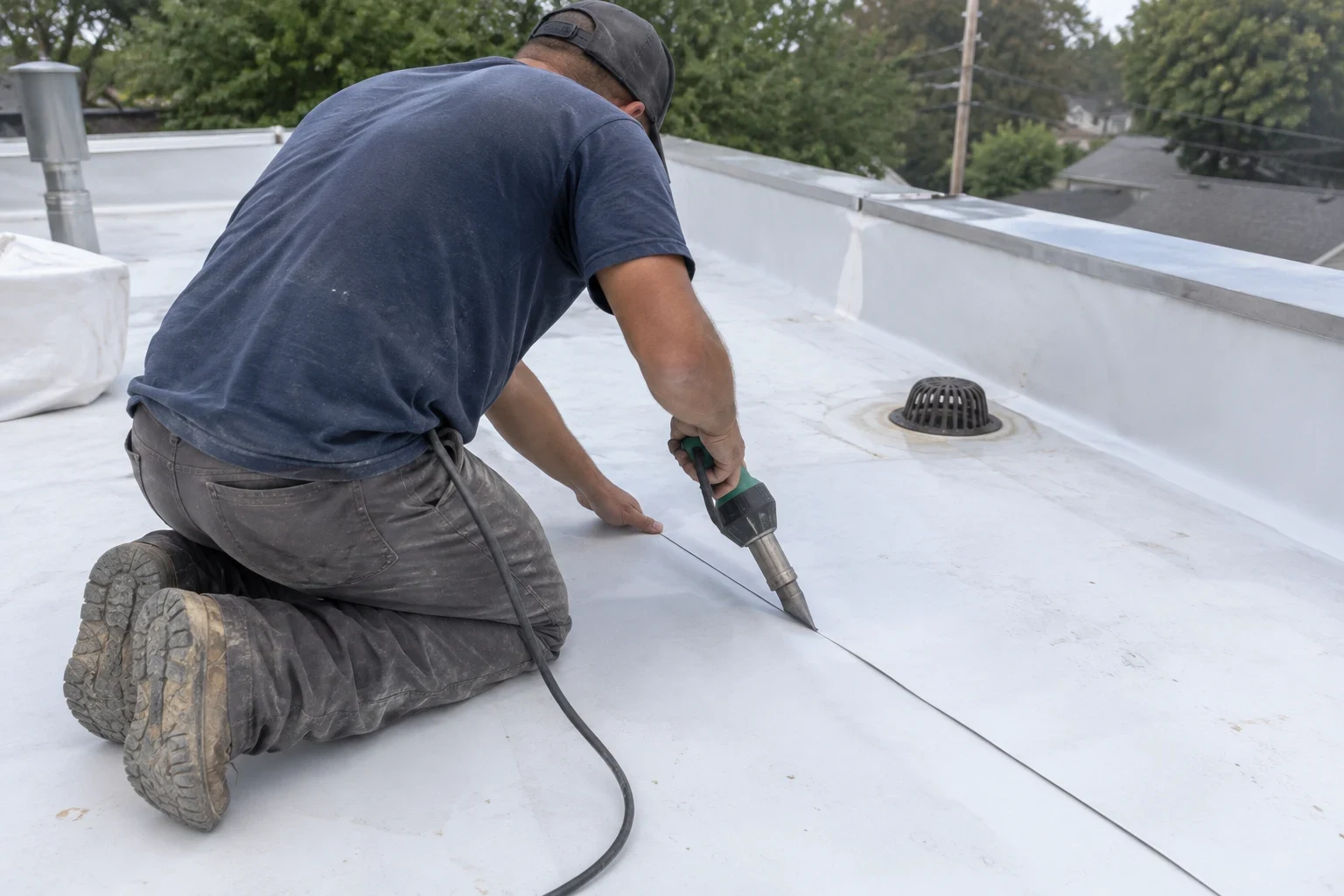
TPO (thermoplastic polyolefin) is a single-ply roofing membrane sold in wide rolls. Its seams are fused with a hot-air welder, so the overlap becomes one continuous sheet rather than a glued or taped joint. That matters on low-slope roofs, where water moves slowly and sits on every seam longer than it would on a pitched roof.
Asphalt shingles are not meant for slopes under 2:12, and most porch roofs, dormers and additions built with a nearly flat pitch fall below that. Rolled roofing and older modified bitumen were the usual fix, and they tend to crack, blister and open at the laps after years of freeze-thaw cycles. TPO is a durable replacement for those sections, and it ties into the shingle roof around it.
Before we recommend it, we look at what is already there. Sometimes a leaking flat section only needs a flashing repair. When that is the honest answer, we say so, and the work goes under roof repair instead.
What a TPO Installation Includes
Tear-off to the deck
We remove the old rolled roofing, modified bitumen or shingles down to the sheathing. Covering a wet or failing layer traps moisture under the new membrane, so we don't do it.
Deck repair
Soft or delaminated plywood and OSB get cut out and replaced. You see photos of any rotted sections before we close them up.
Insulation and drainage
Where it helps, we install polyiso board or a tapered system to move water toward the edge, a scupper or the gutter. A cover board gives the membrane a firm, even base.
Membrane and welded seams
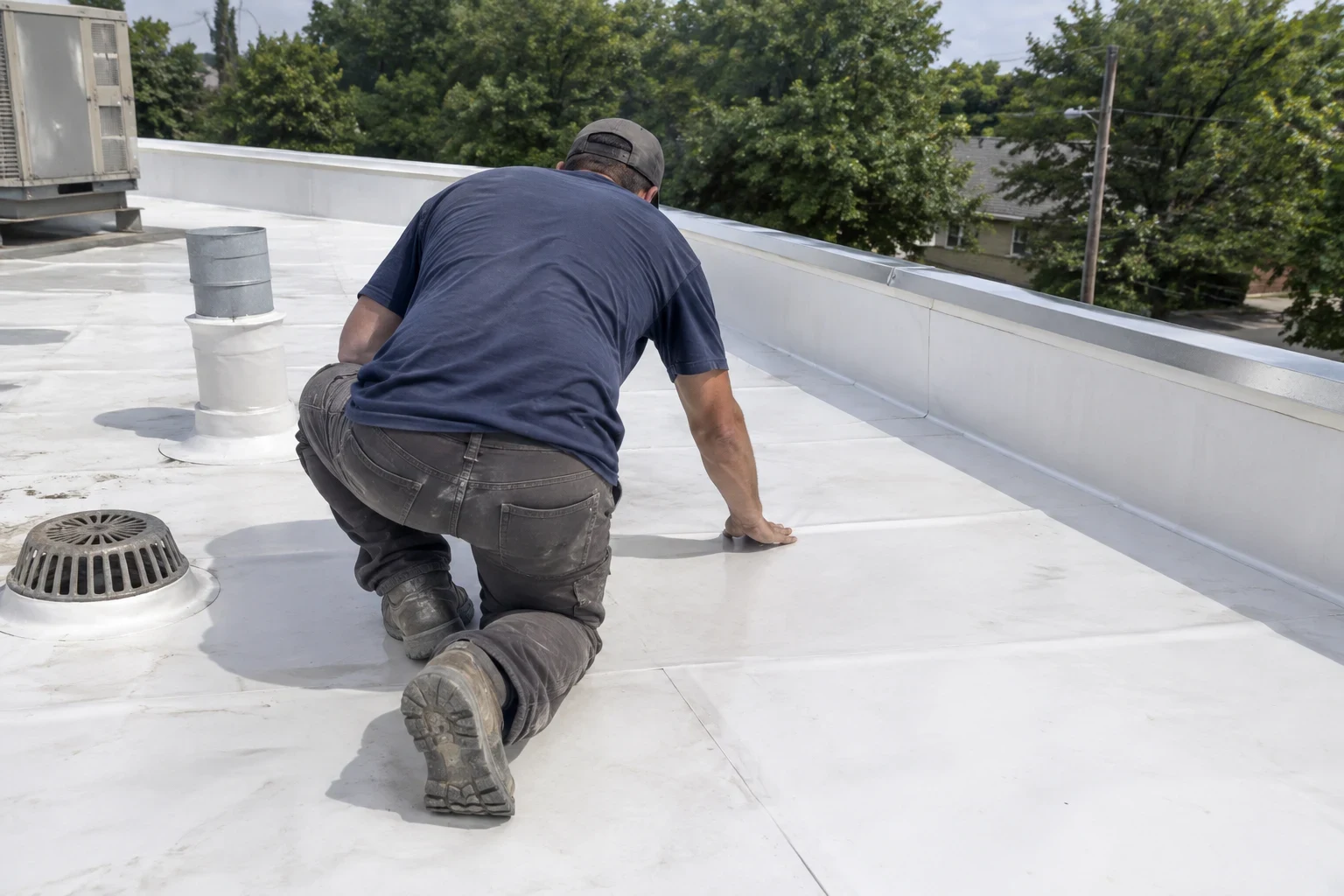
The TPO is fully adhered or mechanically fastened, depending on the deck and the roof's exposure. Every seam is hot-air welded and then probed by hand to find any gap.
Flashing and transitions
Wall flashing, termination bar, drip edge, curbs and pipe boots are detailed in matching TPO. Where the flat section meets your shingle roof, we build the transition so water runs onto the membrane, not under it.
Cleanup
We clear debris and run a magnet over the yard and driveway for nails before we leave.
Signs Your Low-Slope Roof Needs Attention
- Water that sits for days
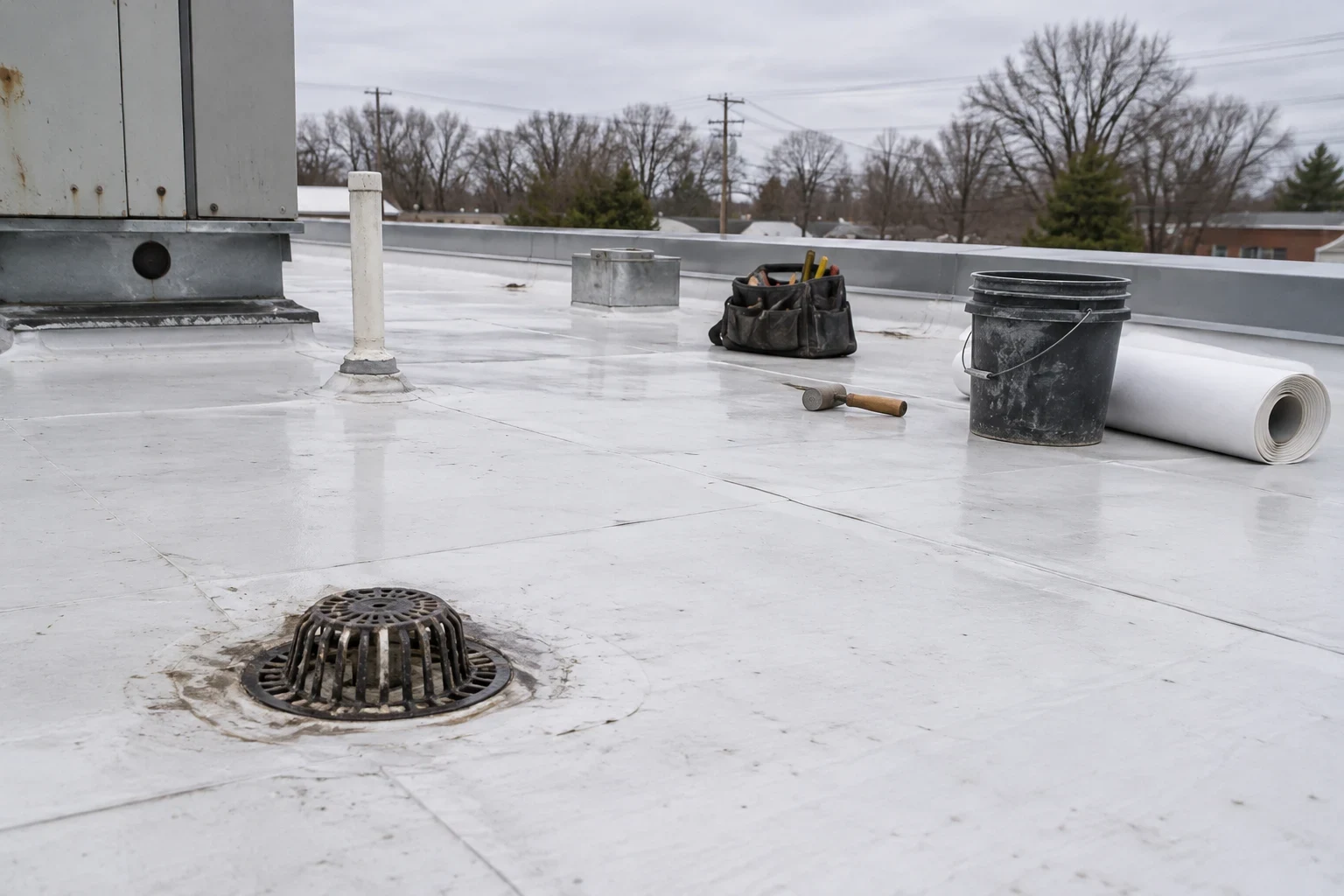
- Ponding that is still there 48 hours after rain points to a sagging deck or poor drainage. Standing water speeds up wear on any membrane and finds every weak lap.
- Blisters, cracks or alligatoring
- Modified bitumen and rolled roofing dry out and crack in a pattern that looks like reptile skin. Blisters mean moisture or air is trapped under the surface.
- Seams lifting at the laps
- Glued or torch-down laps open as the material shrinks with age. Once an edge curls, wind and ice push water straight under it.
- Stains on the porch or room ceiling
- A brown ring under a flat section usually traces back to a failed flashing at the wall or a split seam a few feet away from the stain.
- Decking that flexes under weight
- A section that bends or feels spongy when someone stands on it usually means the plywood or OSB below has absorbed water and lost its strength.
How a TPO Job Runs
- 1
Free inspection and findings
We walk the roof, check the deck for soft areas, look at drainage and flashing, and take photos. You get a plain explanation of what is wrong and whether repair or a new membrane makes more sense.
- 2
Written estimate
If replacement is the right call, we list the tear-off, deck work, insulation, membrane thickness and flashing details line by line. We confirm whether the job needs a permit and pull it when it does.
- 3
Tear-off and prep
On install day we protect the siding, windows and landscaping near the work area, strip the old roof and repair the deck. Most small porch and addition roofs are dried in the same day.
- 4
Install, weld and probe
Insulation, cover board and membrane go down, the seams are welded, and we probe each one. Flashings and edge metal finish the job, followed by cleanup and a final walk-through with you.
What Moves the Price of a TPO Roof
A TPO price comes from your specific roof, not a per-square guess. The biggest unknowns sit under the old surface, which is why we inspect before we quote. If paying for the job all at once doesn't suit your budget, financing is one of the options we offer.
- Square footage and roof openings
- Area sets how much membrane and insulation the job needs. Every vent, plumbing pipe, skylight and HVAC curb also needs its own flashing detail, and each one adds labor.
- Layers to remove
- A single layer of rolled roofing comes off quickly. Two or three layers, or torch-down fused hard to the sheathing, take longer to strip and add disposal weight.
- Deck condition
- Replacing rotted sheathing is the most common change to a low-slope job, and we photograph it so you can see why.
- Insulation and tapered drainage
- Flat insulation board costs less than a tapered system built to correct ponding, but the taper may be what solves the problem.
- Membrane thickness and tie-ins
- Thicker TPO sheets cost more and resist punctures better. A complex transition into an existing shingle roof also adds detail work.
TPO Roofing Questions
- Is TPO a good choice for a porch roof?
- Usually, yes, if the porch roof is below the slope where shingles are rated. TPO handles slow drainage far better than rolled roofing. If your porch has enough pitch for shingles, we'll tell you that too, and shingle roofing may match the rest of the house better.
- Can TPO go over my existing flat roof?
- We don't install it over an old layer. Trapped moisture rots the deck and you can't see the damage until it reaches the ceiling. A tear-off also lets us fix soft sheathing before the new membrane goes down.
- How does TPO hold up to snow and ice?
- Welded seams don't open the way glued laps do as ice forms and melts. The weak points are usually drainage and transitions, which is why we pay close attention to edge metal, scuppers and the joint with your shingle roof.
- Can I walk on a TPO roof?
- Yes, for occasional maintenance like cleaning a gutter or servicing a unit. For frequent foot traffic, we can add walkway pads so the membrane isn't scuffed.
- What colors does TPO come in?
- White is most common and reflects summer heat. Gray and tan are also available, and those often blend better on a porch or addition you can see from the street or a second-floor window.
Find Out What Your Flat Section Really Needs
We'll inspect the deck, seams and drainage and show you photos before suggesting anything. If a repair will do, you'll hear that first.