ServicesRoof Inspections
Roof Inspections in Warren Park
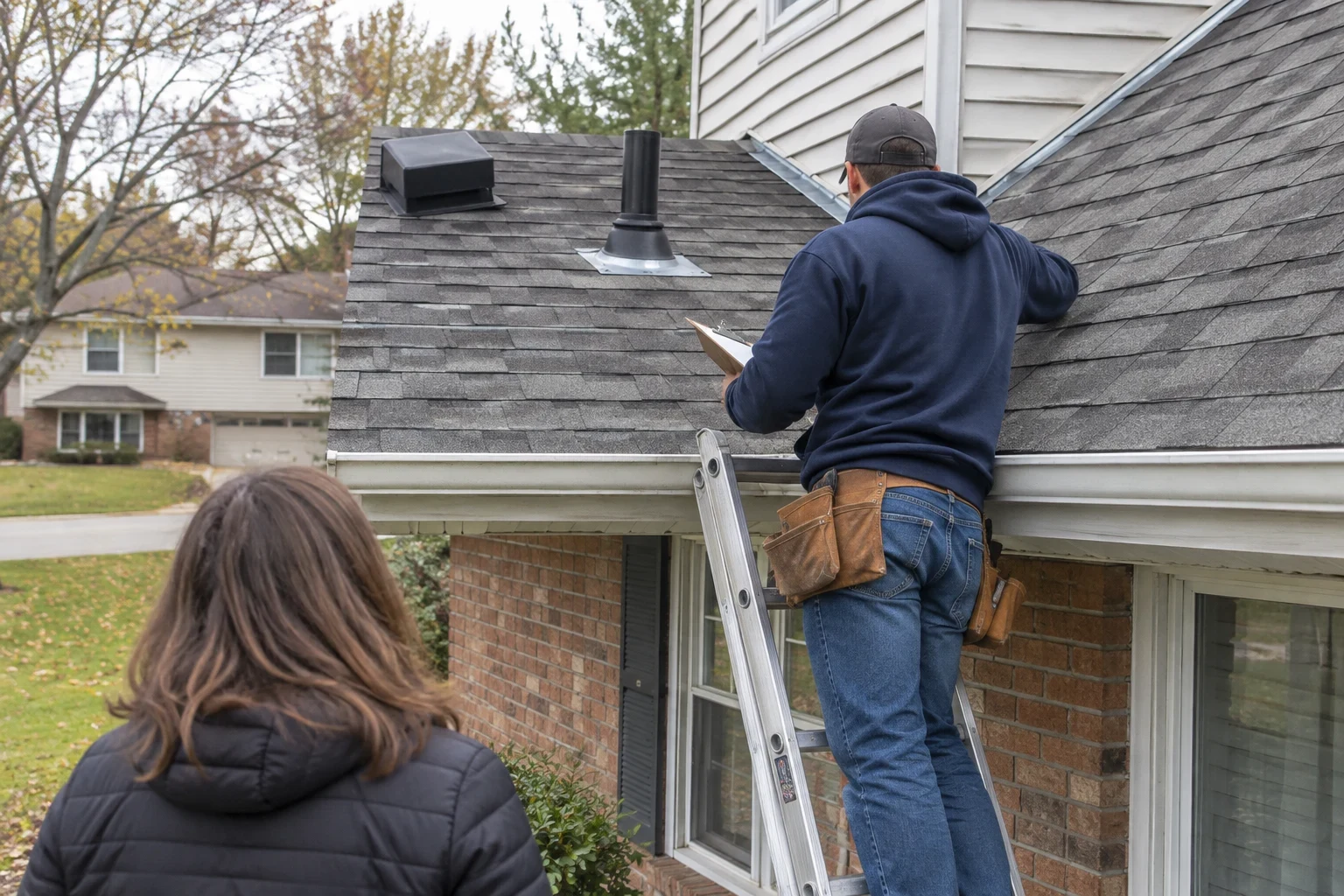
We get on your roof, work through the shingles section by section, test the flashing at every wall and pipe, and view the deck from below in the attic. You see photos of each finding and hear plainly what is sound, what is aging and what needs work before we suggest anything.
Why a Close Look Beats a Guess
Roofs usually give out in small places first. The adhesive strip beneath a shingle tab releases, a nail works its way up out of the deck, the neoprene boot on a plumbing vent splits, or step flashing separates from a chimney. Finding those spots early keeps the fix in repair territory instead of tear-off territory.
We look before we recommend anything. Each problem area gets a photo, a short explanation of the cause, and a straight answer: fix it now, keep an eye on it, or start planning a roof replacement. When the roof is healthy, that is what we tell you.
Freeze-thaw swings in central Indiana make small openings bigger. Water that slips under a lifted tab in late fall freezes, swells and pries the gap wider, so a fall visit heads off spring leaks.
What We Check on Every Visit
- Shingle surface and seal
- We look for granule loss, cracked or curled tabs, hail bruising, and shingles whose adhesive strip has released. Bare spots expose the asphalt to UV, which makes it brittle faster.
- Flashing and penetrations
- Chimney counterflashing, step flashing along sidewalls, valley metal, and the boots around plumbing vents. Most leaks we trace begin at one of these transitions, not in the open field of shingles.
- Decking and fasteners
- We feel for soft spots underfoot and watch for nail pops. A spongy deck usually means long-term moisture, and it changes what a repair or replacement involves.
- Attic ventilation and moisture
- Inside the attic we look for daylight where there should be none, stained sheathing, frost or mold on the underside of the deck, and blocked soffit vents. Poor airflow cooks shingles in summer and feeds ice dams in winter.
- Gutters and drainage
- Sagging runs, loose hangers, clogged downspouts and overflow staining on the fascia. If water backs up at the roof edge, we note it and explain how our gutters work could address it.
- Photo report
- Every finding comes with a photo you can keep. If you are filing a storm claim, those photos give your adjuster a clear starting point.
When It Is Time to Have Your Roof Checked
Hail or high wind just came through
Hailstones can crush the mat under a shingle while leaving it in place, and you will not see that from the yard. Strong gusts break the adhesive seal on tabs even when no shingles end up on the lawn.
Stains on a ceiling or in the attic
A brown ring on drywall means water has been getting in for a while. The entry point is often several feet uphill from the stain.
Granules collecting in the gutters
A new roof sheds some loose granules, and that is normal. A heavy layer from an older roof means the shingles are losing the coating that shields the asphalt from sun.
Ice built up along the eaves last winter
A ridge of ice at the roof edge means attic heat is melting snow higher up. That meltwater refreezes at the cold overhang and can back up beneath the shingles, so a dry ceiling does not prove a dry deck.
You plan to buy or sell
A written roof report with photos gives both sides real information to negotiate with, rather than a guess about how much life the roof has left.
What Drives the Price of Any Follow-Up Work
The roof check costs you nothing. Any repair price depends on what we actually find, which is why we look before quoting. You get a written explanation of the proposed work, and financing is available for larger projects.
Extent of the damage
Resealing a vent boot is a small job. Replacing a run of step flashing means pulling and relaying shingles along the wall.
Condition of the decking
Rotted or delaminated plywood has to be cut out and replaced before new material goes down. We cannot fully know this until shingles come off, so we tell you upfront how it would be handled.
Roof pitch and access
Steep slopes need extra safety setup and take longer to work. Multiple stories and tight lot lines also add time.
Material choice
Matching existing shingles, upgrading to metal roofing, or using TPO on a low-slope section each carries a different cost.
How the Visit Goes
- 1
You call and we set a time
Tell us what prompted the call, whether it is a leak, a storm or simple age, so we know where to focus. We pick a time that works for you.
- 2
Exterior and roof surface
We start at ground level with the gutters and fascia, then go up and work the roof in sections, checking shingles, flashing, vents and valleys. On steep or fragile roofs we use careful ladder placement and footing so we do not cause damage ourselves.
- 3
Attic and underside
If you allow it, we climb into the attic and check the sheathing from below, the insulation depth and the path air takes from soffit to ridge. Hidden moisture tends to show up here before it ever reaches a ceiling.
- 4
Findings walkthrough
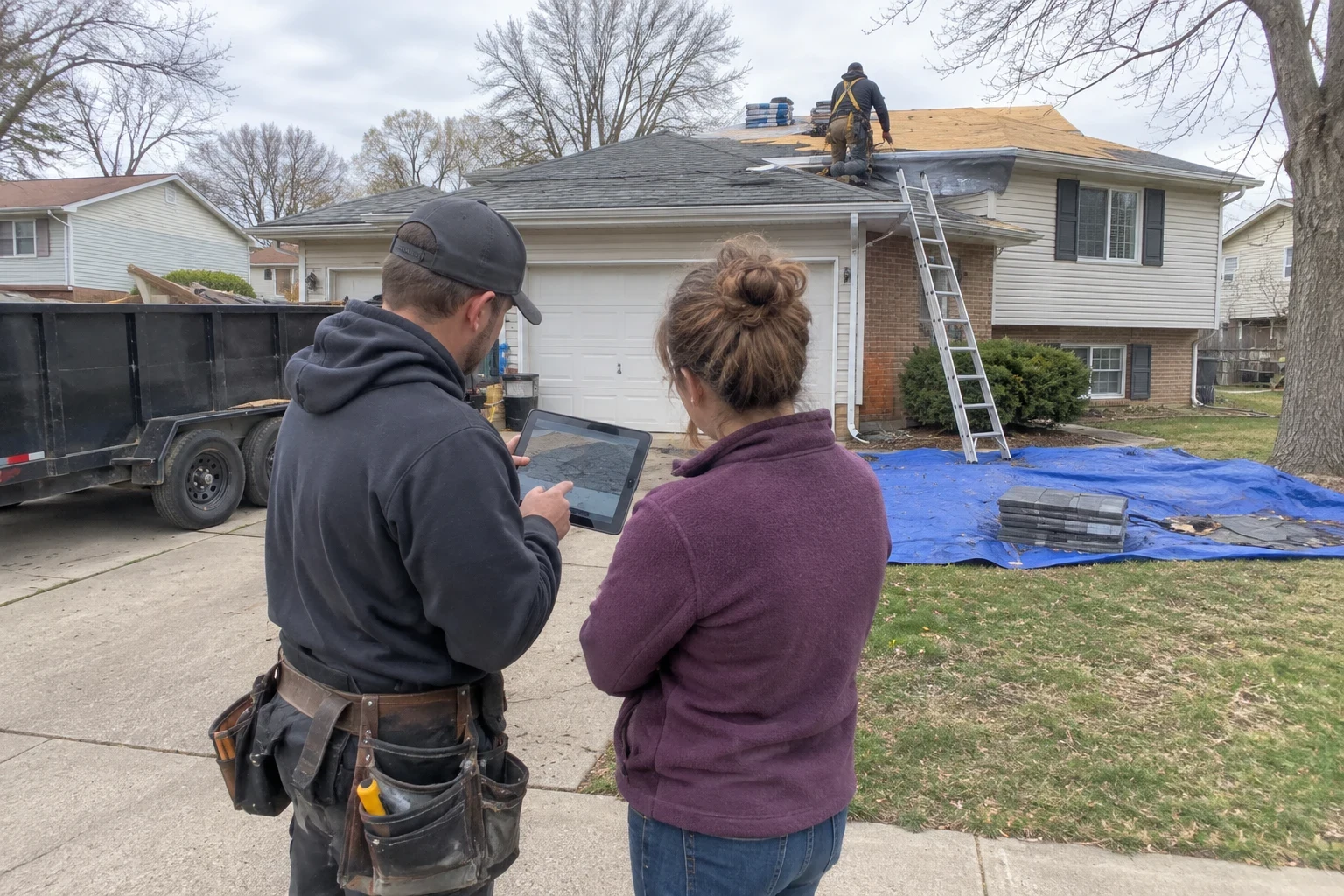
We sit down with you and go through the photos. We explain each issue, how urgent it is, and your options, from a simple repair to a full replacement when that is truly what the roof needs.
Questions Before Your Roof Visit
Is the inspection really free, and will you try to sell me a new roof?
It costs you nothing. We look first, photograph what we find and explain it before any recommendation. If a repair solves the problem, that is what we suggest. Many roofs we check need only small fixes or nothing at all.
How much time should I set aside?
Plan on roughly an hour for a typical roof. A steep pitch, a large footprint or an attic check adds time. So do details like multiple valleys, dormers or a chimney, since each one has flashing we test by hand.
Do I need to be home while you work?
Not for the outside work. We can check the shingles, flashing and gutters without you there. If you are home, we can get into the attic, look at any ceiling stains and go through the photos together before we leave.
Will your report help with an insurance claim?
It can. We work with homeowners and insurance companies on storm damage claims, and our dated photos and notes show hail bruising and wind-lifted tabs clearly. We can walk your adjuster through what we documented. Coverage is the adjuster's call, not ours.
How often should my roof be checked?
A yearly visit is a sensible routine, best in fall before freeze-thaw cycles start working on small gaps. Add a check after any serious hail or wind event. A roof past its middle years deserves closer attention.
Find Out What Your Roof Actually Needs
We serve Warren Park and nearby towns including Indianapolis, Beech Grove and Cumberland. One call sets up a free visit with photos and a plain answer about your roof.