ServicesMetal Roofing
Metal Roofing in Warren Park
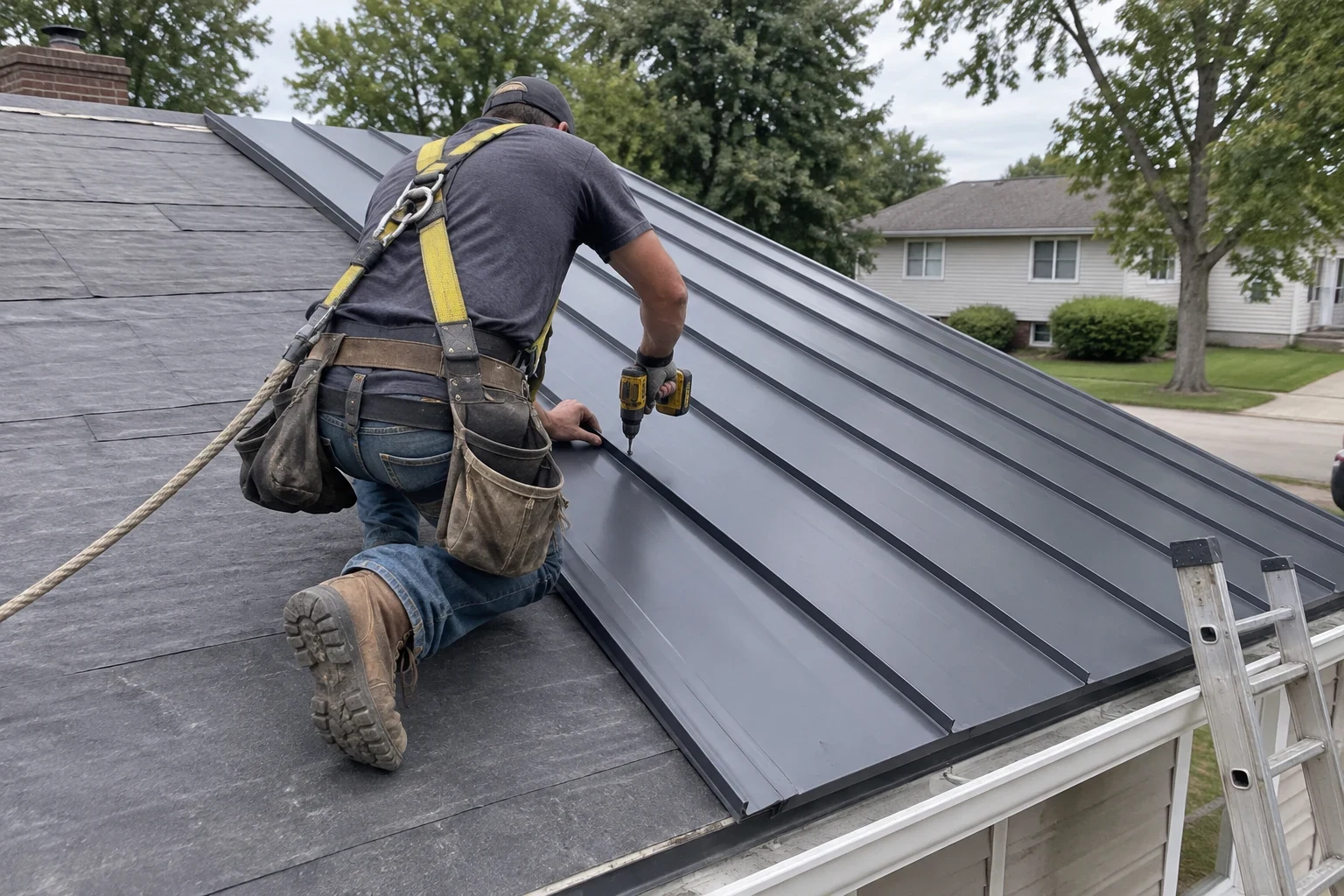
We install standing seam and exposed-fastener metal roofs on homes, and we start by checking your decking, ventilation and flashing so the new panels go onto a structure that can carry them. You get plain findings and a clear answer on whether metal fits your home.
When a Metal Roof Is the Right Call
A metal roof sheds snow, resists wind uplift and holds its finish for decades when the details underneath are right. Most failures we see on metal are not the panels. They are loose fasteners, cracked sealant at the ridge, missing ice and water shield at the eaves, or panels laid over soft decking that keeps moving.
That is why we inspect before we recommend anything. We walk the roof, check the attic for moisture and airflow, and probe the decking. If your current shingle roof has years left, we will tell you. If metal makes sense, we explain which system and why.
Metal is not the only answer. Some homes are better served by shingle roofing, and low-slope sections often need TPO roofing instead of panels. We will say so when it applies.
What a Metal Roof Installation Includes
- Panel system matched to your roof
- Standing seam uses concealed clips that let the panels expand and contract with temperature swings, so fasteners never pierce the weather surface. Exposed-fastener panels cost less but rely on screws with neoprene washers that need checking over time. We explain the tradeoff for your roof pitch and budget.
- Decking repair before panels go on
- We replace rotted or delaminated sheathing so the panels sit flat. Soft decking telegraphs through metal as waves and loosens fasteners.
- High-temperature underlayment and ice barrier
- Metal runs hot in summer sun, so we use a synthetic underlayment rated for it. Ice and water shield goes along the eaves and in valleys where freeze-thaw cycles push meltwater back uphill.
- Flashing and trim fabricated for metal
- Chimneys, walls, skylights and pipe penetrations get flashing and boots designed for metal panels, along with eave, rake and ridge trim. These transitions are where most metal roof leaks start.
- Ventilation and snow guards
- We balance intake and ridge ventilation to limit condensation on the underside of the panels. Where snow could slide onto walkways, entries or gutters, we add snow guards.
- Cleanup and final walk
- Metal offcuts and screws are sharp, so we sweep the lawn and driveway with magnets and walk the finished roof with you.
Signs Your Home May Be Ready for Metal
Repeated shingle replacements
If your roof has needed full replacement more than once, or shingles keep blowing off after each wind event, a metal system may outlast the next two shingle roofs.
Ice dams every winter
Metal sheds snow faster than shingles, and with a proper ice barrier and ventilation it cuts down on the backed-up meltwater that stains ceilings.
Hail-scarred or granule-bare shingles
Bald patches and bruised mats mean the shingles are losing their protection. That is a good time to compare shingle and metal options side by side.
An older metal roof that leaks at screws
On exposed-fastener roofs, washers dry out and screws back out. Sometimes a refastening and roof repair is enough. Sometimes rust at the laps means panels need replacing.
Planning to stay a long time
Metal costs more up front. It pays off best when you expect to own your home long enough to see the extra service life.
What Moves the Cost of a Metal Roof
The shape and condition of your roof move a metal price far more than square footage alone. We price after the inspection and break the estimate into line items, so you can see what each part of the job costs. If paying for the whole roof at once is a strain, ask us about financing when we go over the numbers.
Panel type and gauge
Standing seam with concealed clips costs more than exposed-fastener panels. Heavier gauge steel and premium paint finishes raise material cost but stand up better to hail and fading.
Roof complexity
Every valley, dormer, hip and chimney calls for custom-cut panels and fabricated flashing. A plain gable roof goes on much faster than one broken up by several planes.
Decking condition
Sheathing sits hidden under the current roofing, and some soft or rotted boards only show themselves once tear-off exposes the deck. We write a set price for each replaced sheet into the estimate, so any added decking is a known number before work begins.
Tear-off layers
Stripping a single layer of shingles is routine. Each extra layer adds labor, dumpster weight and disposal fees.
Pitch and access
Steep slopes take more safety equipment and slower footing, and a tight lot makes moving long panels to the roof harder.
How a Metal Roof Job Runs
- 1
Inspection and plain findings
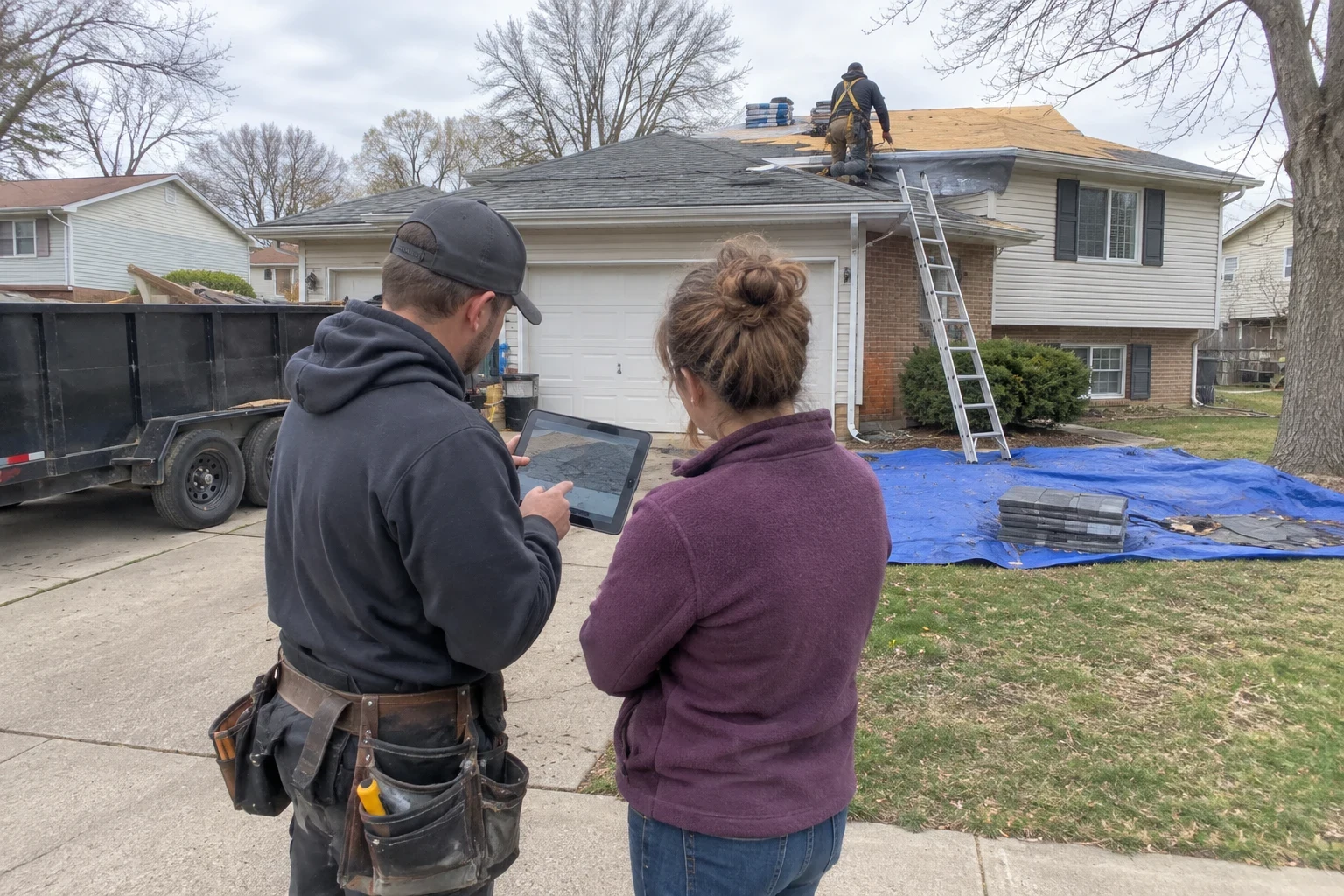
We check the roof surface, decking, attic and flashing, take photos, and tell you what we found before any recommendation. You get a written, line-item estimate.
- 2
Permit and material order
We pull the required permit and order panels, trim and color to your roof measurements. Standing seam panels are often formed to length, which takes some lead time.
- 3
Tear-off and deck prep
We remove the old roofing, protect landscaping and siding with tarps, replace damaged decking, and install underlayment and ice barrier the same day so your home is never left open.
- 4
Panels, flashing and trim
Panels go on from the eave up, with clips or fasteners spaced to the manufacturer's pattern. Flashing at every wall, chimney and penetration is installed and sealed as we go.
- 5
Cleanup and walkthrough
We magnet-sweep the property, haul away debris and walk the finished roof with you, pointing out each detail we covered.
Metal Roofing Questions
Will I hear every rainstorm under a metal roof?
Not on a house built with a solid deck. Plywood or OSB sheathing, synthetic underlayment and attic insulation dampen the sound, so a storm reads about the same as it does on shingles. The drumming people remember comes from barn panels screwed over open purlins with nothing beneath them.
Can you put metal over my existing shingles?
Sometimes it is allowed, but we usually recommend a tear-off. Removing the shingles lets us check and repair the decking, install a proper ice barrier, and avoid trapping moisture under the panels. We will tell you what we see before you decide.
Does metal attract lightning?
No. Metal roofing does not make a strike more likely, and because it is noncombustible it will not ignite if one does occur.
Will hail dent a metal roof?
Large hail can dent lighter gauge panels, though dents are often cosmetic and do not cause leaks. Heavier gauge steel and textured finishes resist denting better. If a storm does damage your roof, our storm damage repair service works with homeowners and insurance companies on the claim.
What is oil canning?
It is a visible waviness in flat areas of metal panels caused by stress in the steel or uneven decking. Flat, sound decking, correct clip spacing and striated or ribbed panels keep it to a minimum. It does not affect how well the roof keeps water out.
Find Out If Metal Fits Your Home
We will look over your roof, show you photos of what we find and give you a straight answer on metal versus your other options. Homeowners from Warren Park to Beech Grove and Cumberland can set up a visit with one call.